Life, Liturgy and Latin
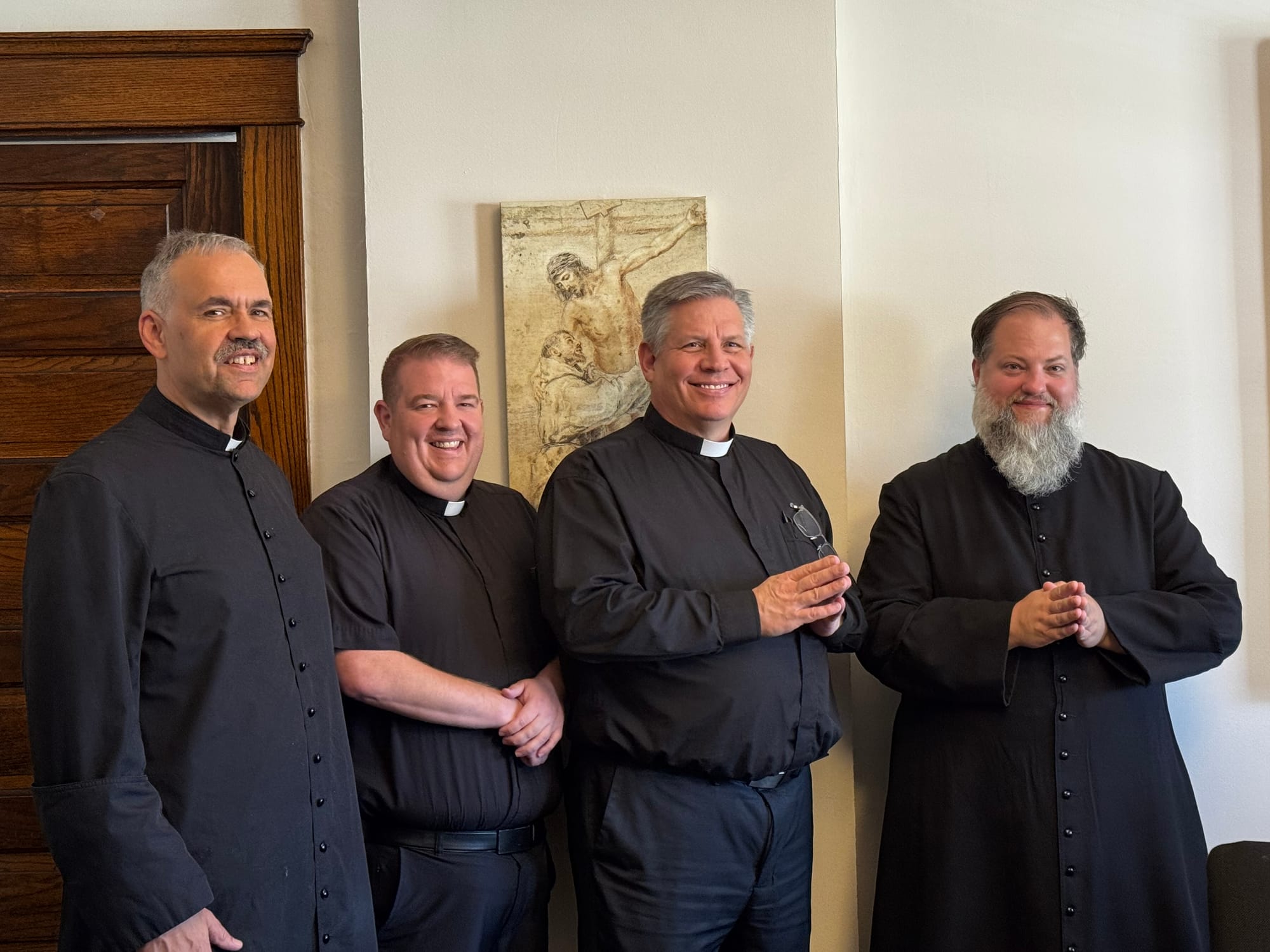
We priests of the Northwest-5 Family of Parishes often receive feedback from parishioners about any changes in the way the Mass is celebrated. This has been especially true of the use of the Latin language within the liturgy. We would like to explain the why of using Latin in the liturgy as well as the what and the how.
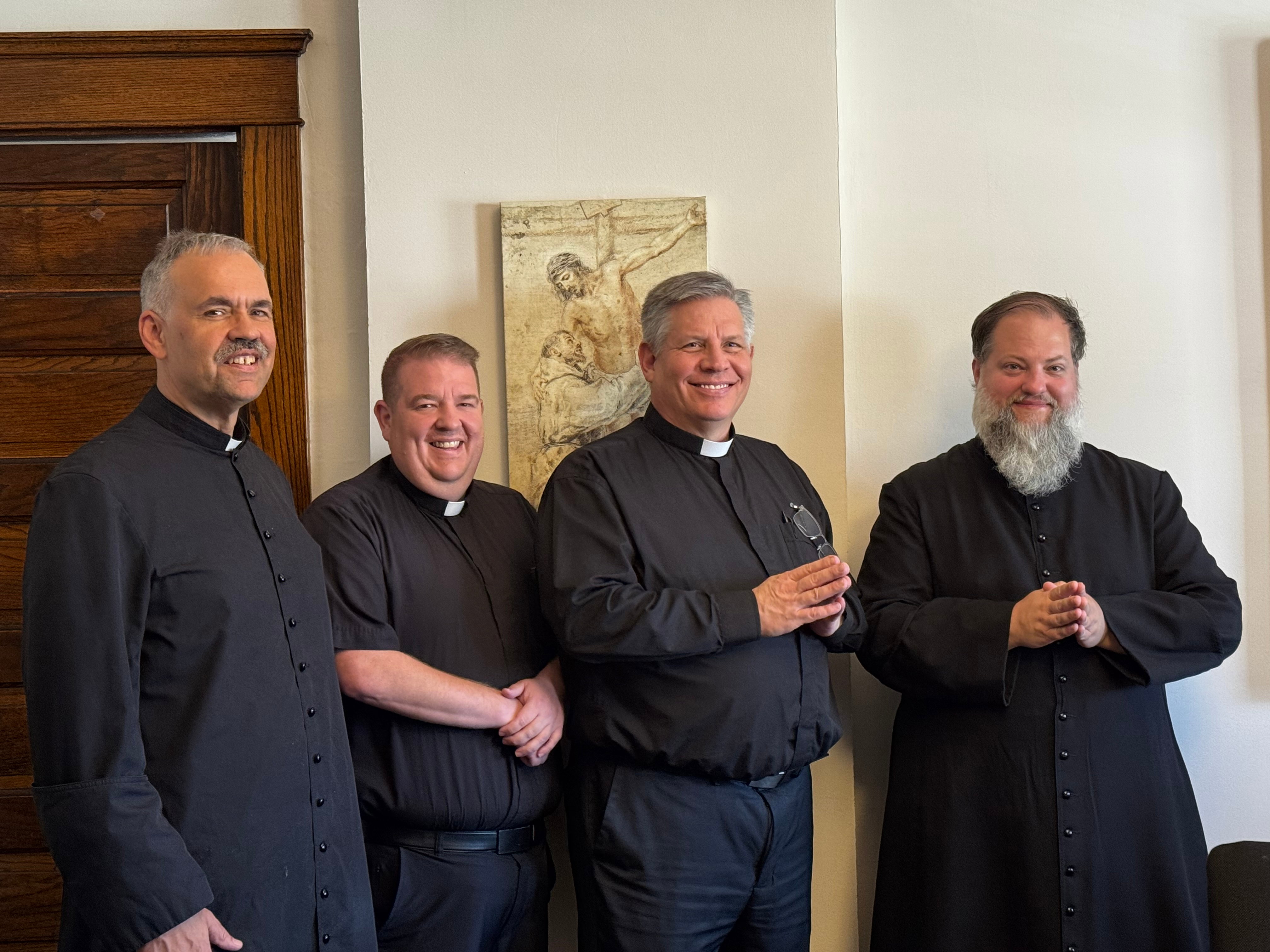
Fr. Ned continues to work toward the goal of celebrating the Mass as faithfully and reverently as possible, according to the tradition of the Church. Before we get into the “nitty gritty” of the use of Latin, it is important to step back and understand the big picture of how the liturgy shapes our life in Christ.
The Church has always taught that the celebration of the sacred liturgy (Mass and the daily prayer cycle of the Liturgy of the Hours – a.k.a. the breviary or Divine Office) stands at the very core of her spiritual life. In the modern era, the memorable description of the liturgy as “font and apex (high point)” of our prayer life has been used to stress its fundamental importance. That formulation reminds us that all the graces of Jesus Christ the Son of God, who redeemed us by His death on the Cross, Resurrection, and Ascension into Heaven, in a real sense flow through the celebration of the Mass and Divine Office. Further, the right worship of the triune God, above all in the Mass, is the high point of our relationship with the Lord because it is at the heart of Christ’s plan for our salvation and heavenly Communion.
On his ordination day, every priest makes this sacred promise:
(Bishop) Do you resolve to celebrate faithfully and reverently, in accord with the Church's tradition, the mysteries of Christ, especially the sacrifice of the Eucharist and the sacrament of Reconciliation, for the glory of God and the sanctification of the Christian people?
(Priest) I do. [emphasis added].
This promise binds all priests, but pastors especially. That is because it is they who, under the direction of their ordinary (bishop of the diocese), are chiefly responsible for ensuring that the sacred liturgy is celebrated with fitting reverence, beauty, and devotion, according to all of the current liturgical norms and guidelines of the Church and in accord with what has been handed on to us by Christ since the first Mass at the Last Supper.
In this context, Fr. Ned has asked Fr. Reckers and me to prepare our Northwest-5 parishes for some minor changes to our liturgical celebrations beginning this upcoming Advent season, to enhance our worship and restore some of the tradition of the liturgy that has been lost in the last 50 years or so. This will include the occasional use of Latin in the “ordinary” of the Mass, which some of our parishes are already doing. (Some lingo: the ‘ordinary’ of the Mass consists of the parts that are repeated every time, vs. the ‘propers’ which change from Mass to Mass). The most notable change is that we will begin teaching parishioners the Our Father prayer in Latin.
Over the next several weeks, we will explain in detail how the Second Vatican Council, which simplified the celebration of Mass in the 1960s and 1970s, also directed the Church to continue to use Latin and chant – and why that guideline is only now being fully implemented in many parishes. Please watch the bulletin and the nwv.church website for more information.
We hope to answer these specific questions and more: What is the sacred liturgy? Who is the object of our prayers in the liturgy? Who governs its celebration and decides how it should be celebrated? What is a “sacred language,” and why and when should it be used in the liturgy? How do the texts of the ancient prayers of the liturgy correspond to the musical form of those prayers? What if I don’t like the way the Mass is celebrated? What does and doesn’t belong in the Mass?